Note: This is a transcript of the YouTube video below, provided for those who prefer reading. If you have any comments or questions for me, please leave them on YouTube!
When it comes to spiritual matters, most people agree that discernment is important. Whether it’s evaluating a channeled message, questioning a whistleblower’s claims, or assessing a religious text, it’s generally considered healthy to question everything.
After all, isn’t that what truth-seeking is about?
But there is one thing almost nobody questions: intuition itself.
We’re all aware of sayings such as “trust your gut,” “the answers lie within,” and “intuition knows best.” Even spiritual teachers repeat this stuff without hesitation. And yeah, it does make sense. If intuition is our inner guidance system, then surely we should trust it – otherwise, how could we possibly trust ourselves?
But there’s a problem here.
If intuition were a reliable guide to objective truth, you’d expect it to point everyone in roughly the same direction. Different paths, sure – but arriving at similar conclusions.
Instead, we see the opposite. Everyone has intuition, yet people have completely different beliefs – and each feels certain they’re the ones in the right.
Take Jimmy, for example.

He’s a middle-aged man from Ireland who was raised as an atheist, read the Bible as an adult, and became a devout Christian.
Finnegan, on the other hand…
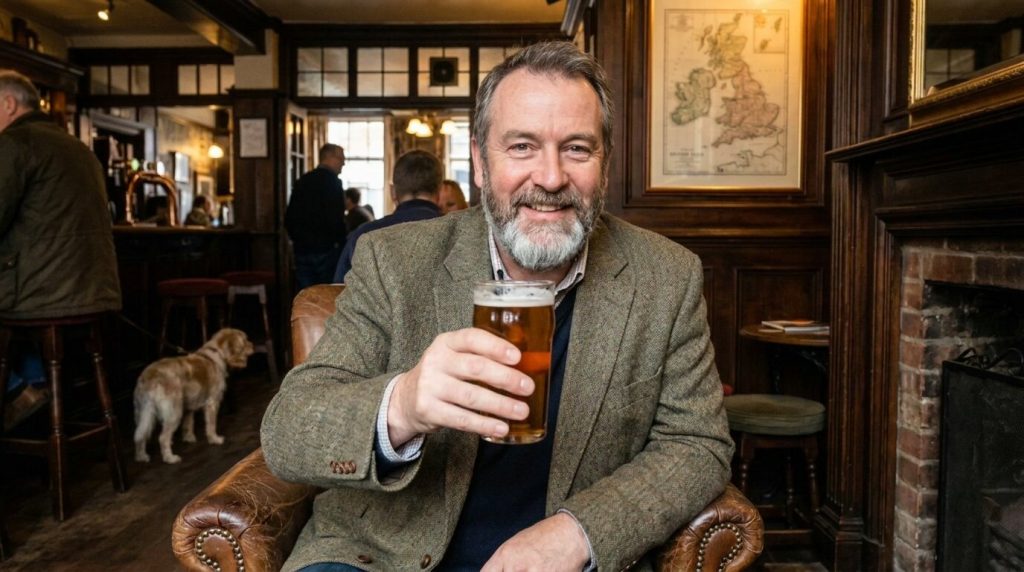
…is a middle-aged man from Northern Ireland who was raised as a Christian, read Richard Dawkins’s The God Delusion as an adult, and became a militant atheist.
Now both of these men are roughly the same age and were born… on the same patch of land, shall we say. Yet when Jimmy read the Bible for the first time, he felt a deep inner certainty – like he had finally stumbled upon the answers to life.
The same was true for Finnegan. He never resonated with Christianity or any other religion as a child, yet when he read The God Delusion, it was like a veil had been lifted. Finally, he discovered a rational perspective that just made sense.
So what is going on here?
Jimmy’s intuition told him Christianity is true. Finnegan’s intuition told him atheism is true. But both can’t be right as far as objective truth is concerned, so logically there are only two possibilities:
- Possibility one: one of them is correct and the other isn’t.
- Possibility two: both are wrong, and the truth lies somewhere else.
But those possibilities only tell us which belief, if either, is true. They don’t explain why two sincere people could experience such powerful intuitive certainty while arriving at opposite conclusions. However, the reason for this becomes clear once we understand the true purpose of intuition.
You see, before we incarnate into third density – the level of physical human experience we live in – our souls create something called a life plan.
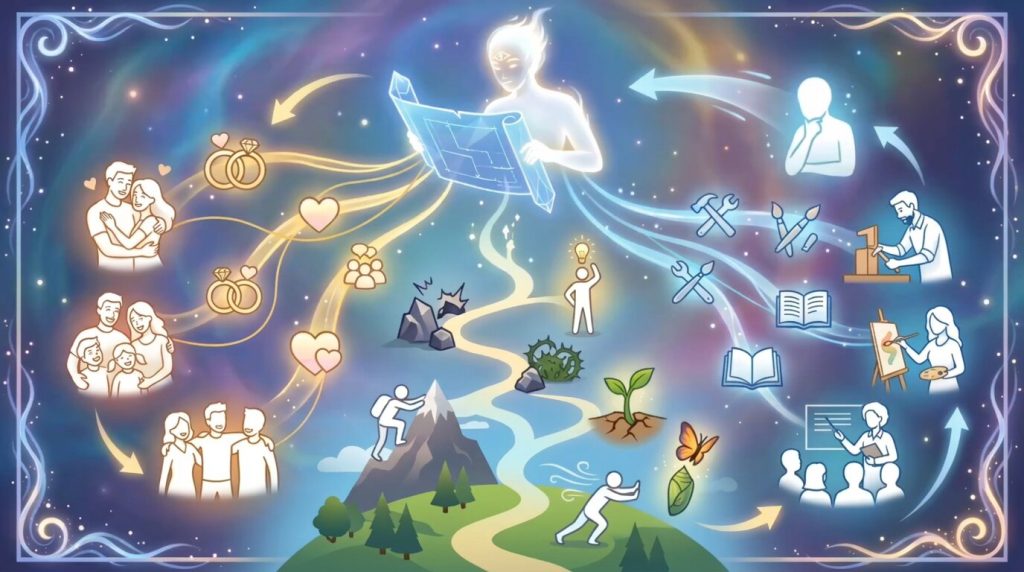
This life plan outlines the experiences, relationships, challenges, and lessons we intend to work through in this lifetime. Since this is a free will universe, these plans tend to be flexible blueprints rather than rigid scripts. The main themes are fixed to some extent, but the paths to them remain relatively fluid.
The result is that our intuitions are not primarily tuned to objective truth – they’re tuned to what our souls planned for this lifetime.
So Jimmy’s soul planned a journey from atheism to Christianity. His intuition was calibrated to eventually reject non-belief in favor of belief in God. Meanwhile, Finnegan’s soul planned the opposite journey, so his intuition nudged him toward atheism.
They simply resonated with what they needed in order to fulfill their life plans.
Jimmy and Finnegan are extreme examples, of course. Most people don’t flip between opposite belief systems. For many of us – especially those favoring spirituality over religion – the shifts are subtler, more like firmware updates than full-blown course corrections.
Take me, for instance. When I was a teenager, I was really into David Icke.
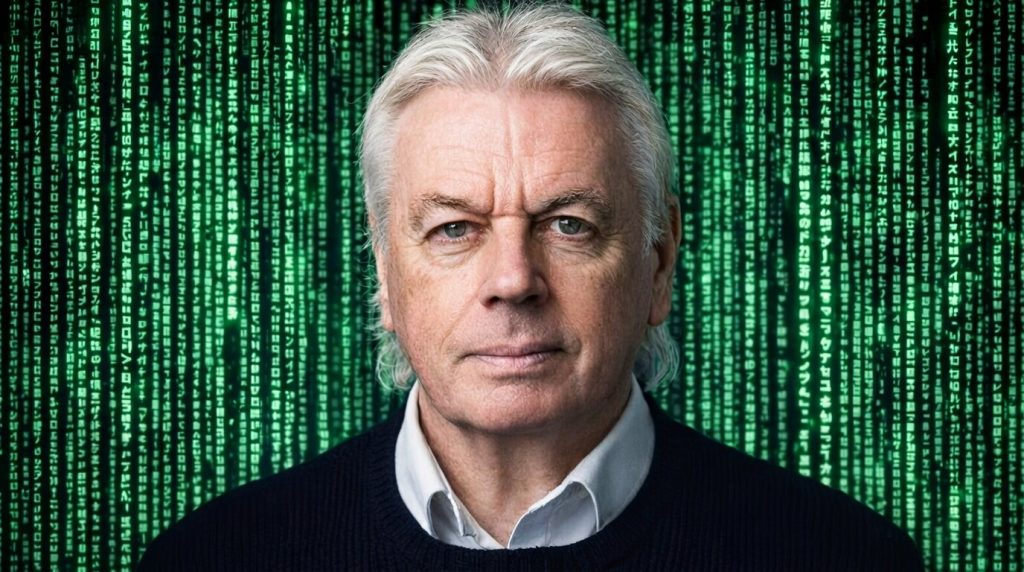
One of my favorite books of his was Tales from the Time Loop, published in 2003. In it, he argues that reality is a simulated, holographic time loop controlled by non-human forces, and that humanity is spiritually imprisoned until we awaken to our infinite nature.
I had never encountered anything like it and was blown away. I resonated so deeply with it that I remember tearing up with gratitude over these newly discovered revelations. Finally, I thought, a theory that explains who we are and why the world is the way it is!
Then, less than a year later, I read the Law of One material for the first time. It offered a far more sophisticated framework for understanding reality, and suddenly Icke’s ideas – especially the whole prison-planet angle – felt crude and limited in comparison.
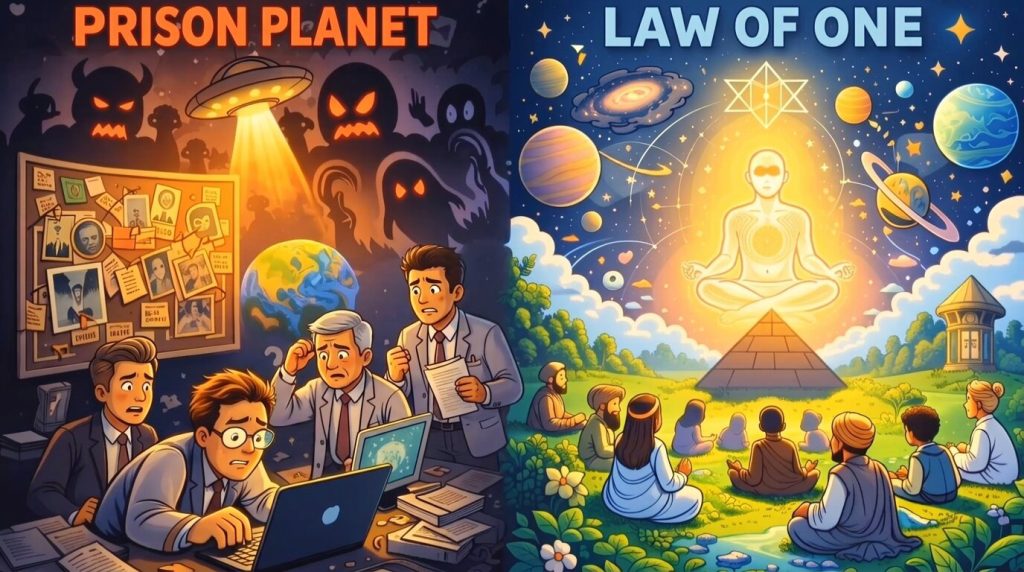
So was my intuition “wrong” when I resonated with Tales from the Time Loop?
Of course not!
David Icke’s work was simply a stepping stone. It helped pave the way for the Law of One – a more mature set of teachings that I still resonate with closely to this day.
So, the bottom line isn’t that intuition is untrustworthy. It’s just that its job is more nuanced than simply “pointing us to the truth.” Intuition guides us through experiences, nudging us toward ideas and perspectives that help us grow and learn what we came here to learn. Sometimes that means we resonate deeply with something, only to outgrow it at a later date.
When that happens, understand that nothing was a mistake. In this vast field of choice and possibility, every intuitive nudge – whether it led to something lasting or something temporary – was a meaningful step along the path that your soul set out for you.
